
Essential Contact Lens Guide for Summer Holidays
"Can I wear my contacts in the sea? What about the pool? And what happens if I run out abroad?"
Every summer, contact lens wearers head off on holiday and encounter the same set of questions — usually at the moment they're standing at the water's edge, lenses in, wondering whether to take them out.
The answers matter more than many people realise. Contact lens complications from holiday-related habits are among the most common causes of serious eye infections we see in practice. Most are entirely preventable with a little preparation and a few simple rules followed consistently.
Whether you're heading to a pool in Tuscany, the sea in Cornwall, or a long-haul flight to Southeast Asia, this guide covers everything you need to know — including the one water-related risk that every contact lens wearer should understand before they travel.
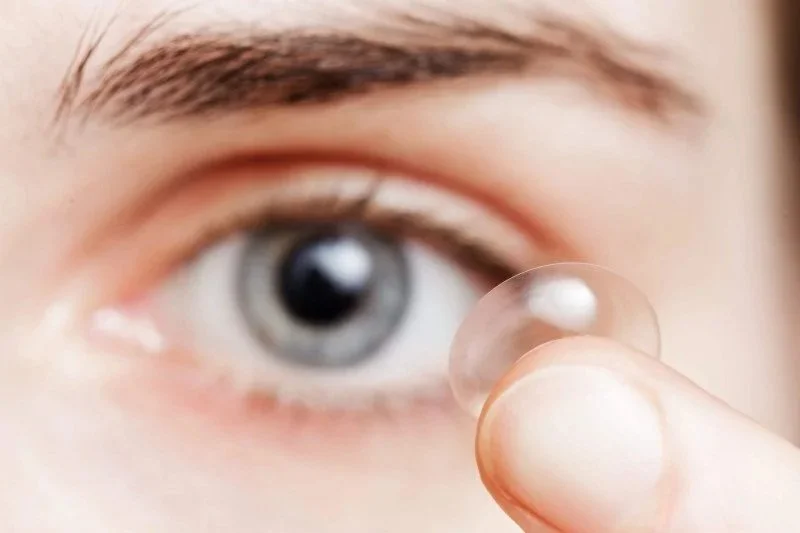
The One Thing Every Contact Lens Wearer Must Know
Before we get to packing lists and practical tips, there is one piece of information that takes priority over everything else in this article.
Never wear contact lenses in water.
Not the sea. Not the swimming pool. Not the river, the lake, or the hotel hot tub. Not even in the shower, strictly speaking — though this is a habit many people maintain at home without incident, the risk is real and worth understanding. The reason is a microscopic organism called Acanthamoeba.
What is Acanthamoeba — and why does it matter?
Acanthamoeba is a single-celled organism found widely in natural and treated water sources — tap water, swimming pools, hot tubs, rivers, lakes, and the sea. It is not a bacterium or a virus, which means standard water treatment processes, including chlorination, reduce but do not eliminate its presence.
For most people, Acanthamoeba is completely harmless. For contact lens wearers, it presents a serious risk.
When a contact lens is worn in water containing Acanthamoeba, the lens acts as a vehicle — trapping the organism against the surface of the cornea. The micro-abrasions caused by everyday lens wear create entry points. Once attached, Acanthamoeba can begin to burrow inward.
The resulting condition — Acanthamoeba keratitis — is a rare but devastating corneal infection. It is extremely painful, notoriously difficult to treat, and can cause permanent scarring, vision impairment, or in severe cases, loss of the eye.
What makes Acanthamoeba keratitis so dangerous?
Unlike bacterial infections, Acanthamoeba responds poorly to most standard antibiotic eye drops. Treatment typically requires intensive, hourly application of specialist anti-amoebic drops for several weeks — sometimes months — and is only effective if caught very early.
Late diagnosis is common because early symptoms — eye pain, redness, sensitivity to light, a feeling of something in the eye — are easily confused with a standard infection or a scratched cornea.
The good news: Acanthamoeba keratitis is almost entirely preventable. The single most effective measure is keeping contact lenses away from all water sources.
Water, Lenses, and Risk: Not all water exposures carry identical risk.
Here is a clear overview to help you make informed decisions this summer.
Hot tub/jacuzzi (Very High Risk): Highest risk of Acanthamoeba contamination. Warm, aerated water is ideal for the organism. Never wear contact lenses in a hot tub under any circumstances.
Lake/river (Very High Risk): Natural fresh water carries the highest concentration of Acanthamoeba. Avoid entirely with contact lenses in — consider prescription goggles for water-based activities instead.
Sea/ocean (High Risk): Salt water does not kill Acanthamoeba. Exposure also causes lens swelling and discomfort from osmotic imbalance. Risk increases if submerging your head.
Swimming pool (High Risk): Chlorination reduces but does not eliminate Acanthamoeba. The lens holds the organism against the corneal surface — the chlorine doesn't reach it.
Tap water (Moderate Risk): Never rinse lenses or cases with tap water. Even in the UK, trace Acanthamoeba can be present in some water supplies. Always use sterile saline.
Sterile saline solution (Safe): Sterile saline is the only safe liquid for rinsing contact lenses. Always use fresh solution — never top up old solution in a case.
What to do if your lenses get wet
If your lenses come into contact with any water source, remove them as soon as possible, rinse your eyes with sterile saline, and dispose of the lenses if possible. Do not reinsert them.
If you experience significant eye pain, increasing sensitivity to light, blurring, or redness that is worsening rather than improving in the days following water exposure — contact us promptly. Do not wait to see if it resolves on its own.
Daily vs Monthly Lenses on Holiday: Which Is Better?
If you currently wear monthly or two-weekly replacement lenses, a holiday is an excellent reason to consider switching to daily disposables for the duration of your trip — or permanently.
The case for daily disposables on holiday
No lens case required — one less thing to pack and lose
No solution to carry or find abroad — a single box covers most trips
If a lens feels uncomfortable at any point, discard it and open a fresh one — no guilt, no cost calculation
Lower infection risk overall — you begin every day with a sterile lens free of protein deposits
Ideal for flights — discard the lenses before sleeping, arrive fresh
Perfect if you only wear lenses occasionally — no waste from an open monthly pack
The cost difference between dailies and monthlies is often smaller than people expect, particularly when solution and cases are factored in. A fortnight's supply of daily disposables is a modest investment for a significantly more relaxed experience.
What about monthly lenses if you prefer them?
Monthly lenses are perfectly suitable for holiday wear — with disciplined hygiene habits. The key rules: never sleep in them (even on planes), replace your case and solution before you travel, and remove immediately if they feel uncomfortable. Never top up old solution in a case — always empty, rinse with fresh solution, and refill.
Flying with Contact Lenses: What You Need to Know
Aircraft cabins typically maintain humidity levels of around 10–20% — far lower than the 40–70% considered comfortable for most people. For contact lens wearers, this accelerates tear evaporation and lens dehydration, causing discomfort and protein deposit build-up on the lens surface.
Our recommendations for flying
On flights under three hours, most wearers manage comfortably with preservative-free lubricating drops. These are cabin-bag safe and do not interact with soft-lens materials.
On flights over three to four hours, strongly consider removing your lenses and wearing glasses for the flight. Your eyes will arrive in significantly better condition.
Never sleep in contact lenses on a plane. Dry cabin air combined with reduced oxygen supply during sleep creates ideal conditions for a corneal hypoxia event — in simple terms, the cornea is starved of oxygen.
If you fall asleep in your lenses, apply lubricating drops when you wake, wait a few minutes for the lens to rehydrate, then remove gently. Never pull at a dry lens.
Keep your glasses in your hand luggage. If you need to remove your lenses unexpectedly, you need to be able to see.
Sun, Heat, and Dry Conditions
UV protection
Contact lenses do not provide meaningful UV protection for the eye. Even UV-blocking contact lenses protect only the small area of the cornea covered by the lens — not the conjunctiva, eyelids, or surrounding tissue. Sunglasses with UV400 certification are essential whenever you are outdoors, and non-negotiable near water, sand, or snow, which all reflect UV radiation significantly.
Maui Jim sunglasses, which we stock at Arthur Hayes Eyecare, use PolarizedPlus2 lens technology that blocks 100% of UV and eliminates glare with exceptional colour clarity — designed specifically for high-reflectance environments.
Heat, dry air, and air conditioning
Hot, dry air — common in Mediterranean destinations — accelerates tear evaporation and lens dehydration. If you are prone to dry eye symptoms at home, expect them to be more noticeable on holiday. Preservative-free lubricating drops used throughout the day make a significant difference.
Hotel rooms, hire cars, and restaurants in hot countries are typically heavily air-conditioned. This can be almost as drying for the ocular surface as the heat outside. If your eyes feel dry indoors despite the cool temperature, this is usually the cause. Consider limiting wearing time if discomfort persists.
Running Out of Lenses Abroad: What to Do
Do not buy contact lenses from pharmacies or optical shops abroad without knowing your exact specification — brand, base curve, diameter, and power. An incorrect base curve can cause significant discomfort and, in some cases, corneal damage.
Keep a copy of your contact lens prescription on your phone. Most countries require one, and it contains all the information needed to source the correct lens.
The best solution is to avoid running out. Order a generous supply before you travel — we offer a home delivery service for contact lenses, so your supply arrives before you leave.
Order before you travel — Arthur Hayes Eyecare home delivery
We offer a contact lens home delivery service — your lenses are ordered, packed, and delivered to your door before you travel. No pharmacy queues, no uncertainty about finding your brand abroad.
If you are unsure whether your current prescription is still valid, or would like to discuss switching to daily disposables for your holiday, get in touch well ahead of your departure date.
Your Holiday Contact Lens Packing List
Before you zip up the suitcase, run through this list.
Spare glasses: Non-negotiable. If lenses cause problems at any point, you need to switch immediately. Update your prescription before you go if it has been over a year.
2. Sufficient supply of lenses: Take more than you think you need — allow for losses, tears, and early disposal. Dailies are ideal for travel. Home delivery before departure avoids last-minute running short.
3. Sterile lens solution Do not rely on finding your brand abroad. Solution formulations vary and some can cause reactions. Carry enough for the trip in your hold luggage.
4. Lens case — pack two
Cases should be replaced every three months. Pack a spare — they crack, get lost, and have been known to be confiscated at security.
5. Preservative-free lubricating drops
Dry eye worsens significantly on aeroplanes. Preservative-free single-use vials are cabin-safe and do not interact with soft lens materials.
6. UV-protective sunglasses
Contact lenses do not provide UV protection. UV-blocking sunglasses with UV400 certification are essential whenever you are wearing lenses outdoors.
7. Prescription goggles (if swimming)
The safest option for any water-based activity. Can be fitted to your exact prescription — ask us before you go.
8. Your contact lens prescription
Keep a copy on your phone. If you need to replace lenses abroad, many countries require a prescription. Your lens type, base curve, diameter, and power are all on it.
When to Remove Your Lenses and Seek Advice
On holiday, the temptation is to dismiss eye discomfort as tiredness, sun exposure, or chlorine irritation and carry on. In most cases it is exactly that. But the following symptoms warrant removing your lenses immediately — do not wait until you are home.
Remove your lenses immediately and seek advice if you notice:
Significant eye pain that is not relieved by removing the lens
Increasing sensitivity to light
Vision that is blurring or has changed
A red eye that is worsening rather than improving after lens removal
Any white spot or opacity on the cornea — the clear front surface of the eye
In the UK, call us directly. Outside the UK, go to the nearest hospital eye department. Lead with the words ‘contact lens’ and ‘eye pain’ — this ensures you are triaged appropriately and not sent to a general walk-in centre.
A Final Word: Glasses Are Not a Defeat
The most common mistake contact lens wearers make on holiday is wearing their lenses for longer hours than they would at home, in more challenging conditions, because they do not want to wear their glasses.
Alternating between lenses and glasses throughout the day — lenses for sightseeing, glasses for the pool, lenses for the evening — is not a compromise. It is exactly the kind of wear pattern that keeps eyes healthy, comfortable, and problem-free for the whole trip.
Healthy eyes on day fourteen feel exactly the same as they did on day one. That is the goal.
Travelling Soon? Get in Touch Before You Go
Whether you need a prescription check, a supply of daily disposables, home delivery before you travel, or advice on prescription goggles — we can help. Don't leave it to the last minute.
This article is intended for general information purposes only and does not constitute medical advice. If you have concerns about your eye health, please book an appointment with a qualified optometrist. Arthur Hayes Eyecare is registered with the General Optical Council.