
Why Do My Eyes Feel Dry Even Though They Keep Watering?
It sounds contradictory, doesn't it? Eyes that water constantly — yet feel desperately dry, gritty, or sore. If you've experienced this and wondered what on earth is going on, you're not alone. It's one of the most common questions we hear in practice, and the answer lies in a condition called Meibomian Gland Dysfunction (MGD).
In this post, we'll explain exactly what MGD is, how it differs from other types of dry eye, how it connects to blepharitis (a condition we've written about before), and — importantly — what you can do about it, both at home and with our help here at Arthur Hayes Eyecare.
The Tear Film: A Three-Layer Story
To understand dry eye properly, it helps to think of your tear film not as a simple pool of water, but as a carefully engineered three-layer structure:
The outer lipid (oil) layer — produced by the meibomian glands in your eyelids — prevents tears from evaporating too quickly.
The middle aqueous (water) layer — produced by the lacrimal gland — carries nutrients, oxygen, and immune defence to the eye surface.
The inner mucin layer — produced by goblet cells on the conjunctiva — helps the tear film stick evenly to the eye surface.
When any one of these layers breaks down, the result is dry eye. But the type of dry eye — and its treatment — depends entirely on which layer is affected.
So What Is MGD, Exactly?
Meibomian Gland Dysfunction occurs when the oil-producing glands along the edge of your eyelids become blocked, thickened, or inflamed. These glands — named after the 17th-century German physician Heinrich Meibom — normally secrete a lipid-rich oil called meibum with every blink, forming that essential outer protective layer of the tear film.
When the glands are not functioning properly, this oil layer thins or disappears. Without it, tears evaporate far too quickly — sometimes in seconds rather than the normal 10 or more seconds. The eye responds by producing more watery tears in a reflexive response. Which is precisely why MGD eyes can feel both dry and watery at the same time.
The paradox explained
When your tear film evaporates too fast, the eye surface becomes irritated. Your nervous system detects this and sends an emergency signal to the lacrimal gland: produce more tears. But these reflex tears are mostly water — they lack the oil layer needed to stay on the eye. So they overflow down your cheek, leaving the eye just as dry as before.
It's a cycle of overproduction and under-protection — and it's the hallmark of evaporative dry eye caused by MGD.
The Link to Blepharitis
If you've read our earlier post on blepharitis — one of our most-read articles — you may already be connecting some dots. There's a reason these two conditions so frequently appear together.
Blepharitis is inflammation of the eyelid margins, often caused by an overgrowth of bacteria (particularly Staphylococcus) or by a mite called Demodex. This inflammation directly affects the meibomian glands. Over time, the glands can become blocked by a biofilm of bacteria, hardened oil, and dead skin cells — a process called gland dropout.
Think of it this way
Blepharitis is the fire. MGD is the damage the fire causes. Left untreated, chronic blepharitis leads to permanent changes in the meibomian glands, which is why we encourage patients to treat blepharitis early, even when symptoms seem mild.
If you already know you have blepharitis, there's a very good chance MGD is also contributing to how your eyes feel.
How We Diagnose MGD at Arthur Hayes Eyecare
Not all dry eye assessments are the same. A basic eye test can detect obvious signs, but accurately diagnosing MGD — and distinguishing it from aqueous deficiency — requires specialised technology. This is something we take seriously at Arthur Hayes Eyecare.
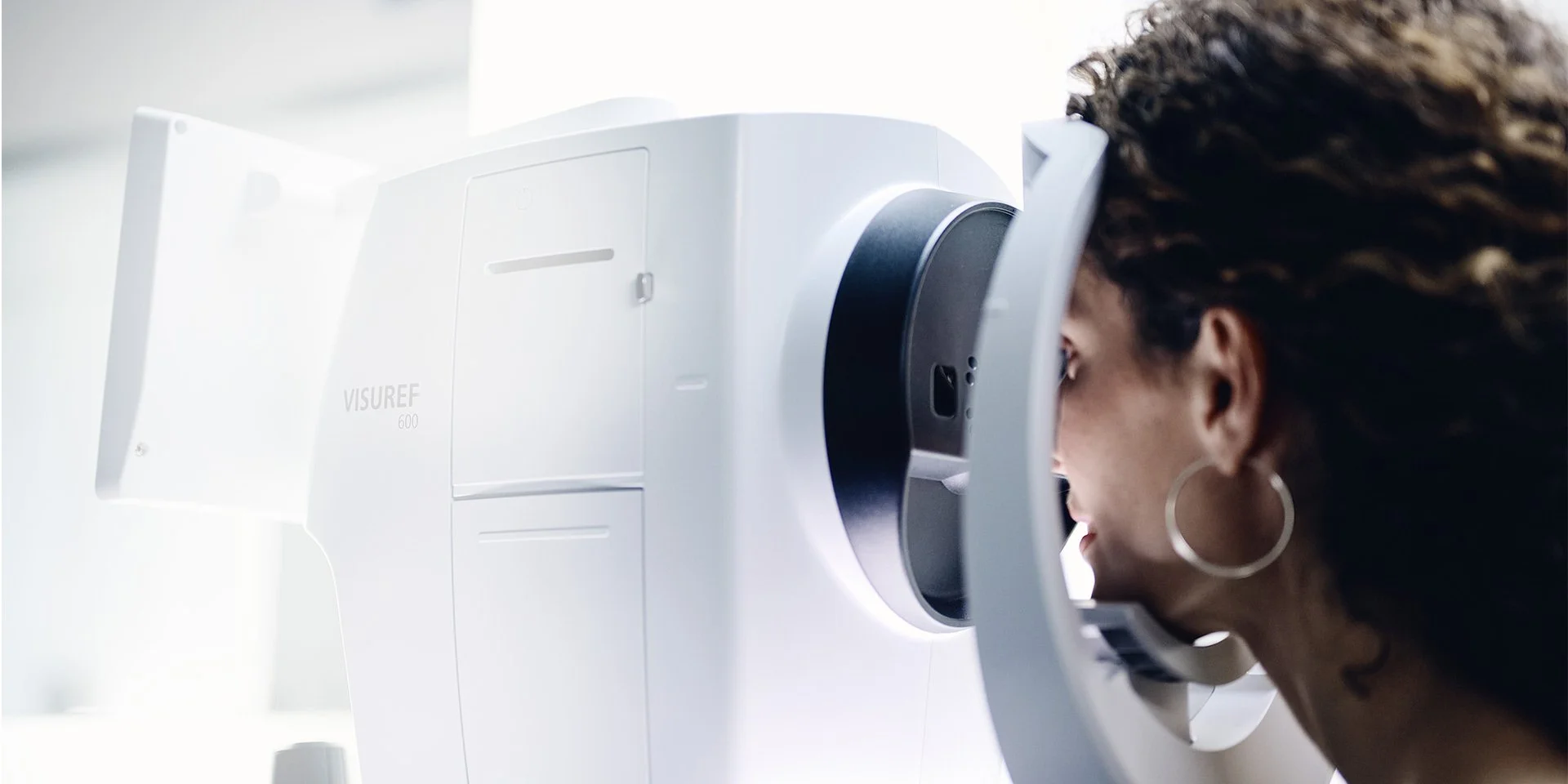
The ZEISS VISUREF 600: More Than Just an Autorefractor
We're proud to use the ZEISS VISUREF 600 as part of our clinical toolkit. While it is best known as a highly accurate autorefractor for measuring your glasses prescription, it also supports dry eye screening as part of its integrated workflow.
What makes this significant is the way the device seamlessly combines different aspects of your eye examination. Rather than dry eye being an afterthought — a quick questionnaire at the end of your appointment — the VISUREF 600 allows our team to incorporate a structured dry eye assessment into the examination process from the outset.
The device features customisable workflow wizards that guide our optometrists through eye exam, spectacle, contact lens, and dry eye steps in a consistent, evidence-based sequence. Measurements are captured automatically and flow directly into the VISUCONSULT 500 data management system, giving us a clear, comparable record at every appointment.
What We're Looking For During a Dry Eye Assessment
Using the VISUREF 600 alongside our clinical examination, we assess:
Tear break-up time (TBUT) — how quickly the tear film destabilises after a blink. A time under 10 seconds can indicate evaporative dry eye.
Lid margin health — we examine the meibomian gland orifices directly for signs of blockage, thickening, or inflammation.
Meibomian gland expressibility — we gently apply pressure to assess the quality and quantity of oil secreted.
Ocular surface staining — using specialised dyes, we can assess damage to corneal or conjunctival cells.
Symptom questionnaire — a validated OSDI (Ocular Surface Disease Index) score helps us quantify severity and track your progress over time.
Supporting Contact Lens Wearers
For patients who wear soft contact lenses — or who are considering them — MGD and dry eye are particularly important. The VISUREF 600 also provides measurements that help us personalise contact lens recommendations to your specific tear film and corneal profile, reducing the discomfort that many dry eye sufferers experience when wearing lenses.
i.Scription Technology: Precision Lenses for Sensitive Eyes
Where relevant, data from the VISUREF 600 feeds directly into ZEISS i.Scription technology — an advanced lens personalisation process that combines your subjective refraction with wavefront aberrometry data. For patients with dry eye, even a slightly suboptimal prescription can amplify discomfort, glare, and visual fluctuation. i.Scription lenses, accurate to 1/100th of a dioptre, can make a meaningful difference to visual comfort — particularly in low-light conditions.
Your MGD Management Plan: What Happens Next
If we identify MGD during your assessment, we'll tailor a management plan to your specific situation. This typically involves a combination of in-practice treatment and a daily home routine you can follow.
There is no quick fix for MGD — the meibomian glands need consistent care to improve their function over time. But the good news is that with the right routine, most patients see meaningful improvement within four to eight weeks.
Treatments we may recommend in practice
Blephasteam or warm mask therapy — a medical-grade heat treatment to liquefy blocked gland secretions.
BlephEx or lid debridement — a professional deep-clean of the lid margins to remove biofilm and open blocked glands.
Lubricating drops — we will recommend a specific formulation matched to your type of dry eye (gel, preserved-free, lipid-based).
Omega-3 supplementation — strong evidence supports daily omega-3 fatty acids in improving meibum quality.
Antibiotic or anti-inflammatory drops — where bacterial overgrowth or inflammation is significant.
Follow-up reassessment — we track your progress using the VISUREF 600 to ensure treatment is working.
Your Daily Lid Hygiene Routine at Home
This is the single most important thing you can do between appointments. Lid hygiene takes around 10–15 minutes and, done consistently, can significantly reduce your symptoms and slow the progression of MGD.
Warm compress — 10 minutes. Apply a clean, warm, damp cloth (or a purpose-made heat mask, such as the Bruder mask) to the closed eyelids. The warmth softens hardened meibomian oil, making it easier to express from the glands.
Massage — 30–60 seconds. Using a clean fingertip or cotton bud, gently massage the eyelid margins in small circular motions. This helps release the softened oil and encourages gland function.
Cleanse — upper and lower lids. Use a dedicated lid wipe (e.g. Blephaclean, Ocusoft) or a clean cotton pad soaked in diluted baby shampoo. Wipe along the lash line to remove debris, crusts, and bacteria. Never use bathroom soap or toner.
Rinse and rest Rinse with cool, clean water if using a solution. Allow your eyes to rest for a few minutes before applying any prescribed drops or artificial tears.
How Often? Twice daily during a flare-up, once daily for maintenance. Think of it like brushing your teeth — the benefit comes from consistency, not intensity.
Products we recommend at Arthur Hayes Eyecare
Bruder Moist Heat Eye Compress — reusable microwave-activated mask for effective warming.
Blephaclean wipes — preservative-free, alcohol-free lid wipes, ideal for sensitive skin.
HydroMed or Thealoz Duo — lipid-containing artificial tears suited to evaporative dry eye.
Omega-3 supplements — we can advise on appropriate formulations and dosages.
Please ask our team for personal recommendations — the right product depends on your specific diagnosis.
When Should You Come and See Us?
Don't wait until your annual eye test if you're experiencing any of the following:
Eyes that water excessively and feel gritty or sore
Fluctuating vision, particularly at the end of the day
Discomfort when wearing contact lenses
Red, itchy, or crusty eyelid margins
A burning sensation that worsens in heated rooms, air-conditioned offices, or when using screens
Dry eye and MGD are progressive conditions. The earlier we identify and treat them, the more meibomian gland function we can preserve. Left untreated, gland dropout is often irreversible.
Book a Dry Eye Assessment
If any of the symptoms in this article sound familiar, we'd love to help. Our dry eye assessment using the ZEISS VISUREF 600 gives us a clear, detailed picture of what's happening with your tear film — and a clear path forward.
This article is intended for general information purposes only and does not constitute medical advice. If you have concerns about your eye health, please book an appointment with a qualified optometrist. Arthur Hayes Eyecare is registered with the General Optical Council.